Amiri Letter-Print Logo T-Shirt Review: We Took the Size-Up Advice and Measured Where the Extra Room Went
We ordered three sizes of the Amiri letter-print tee and put each on a different body type. The size-up advice holds — but the extra room lands in the body, not the shoulders, and the chest print is still the thing to verify.
Priya Raghunathan Reviews EditorField testing, fit across body types, pack volume verification and wear cyclingHands-on score 4.0 / 5
Editor score 4.0 / 5
Reviewed by Priya Raghunathan, Reviews Editor
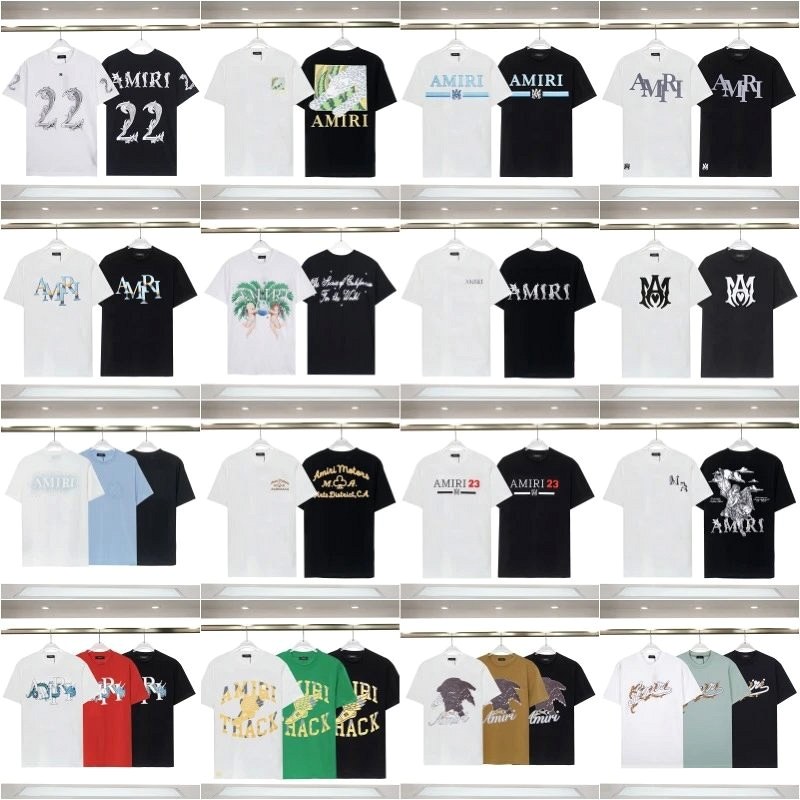
The Amiri letter-print logo T-shirt is the simplest kind of test object: one cotton crew-neck, a printed wordmark across the chest, and a listing that runs from S to XXXL across a very long colour list. What made it worth a sheet is the advice that travels with Amiri tops — buyers say they run slightly small, and the usual fix is to go up a size. So we ordered three sizes rather than one, put each on a different team member, and measured what the size-up actually buys you.
Our samples came through the same agent route readers use. The listing showed $8.36 USD against a $9.87 original price and marked the tee in stock; agent handling and shipping sit outside that figure and are quoted separately, so treat the number as the garment price only.
What the listing claims, and what we could check
The product copy is specific in places and vague in others. It states 100% cotton in a plain weave, a relaxed loose fit, crew neck, short sleeve, regular thickness across four seasons, and a printed logo applied by a dye process. It also lists breathability, wrinkle resistance, moisture wicking, abrasion resistance and colour fastness as fabric functions — that is seller wording, not a test result, and we could not reproduce a lab method for any of it at our bench.
What we could do: weigh the samples against the stated 180–250 g/m² band, count stitches at the neck rib and hem, check the print edge under the light box, and take flat measurements with the listing's own 1–3 cm tolerance in mind. The listing gives no per-colourway weight, and with 55 colour codes on the option list we can only speak for the three units in our hands.
The size-up test: three sizes, three body types
This is where the tee earned its score. The recommendation to size up is usually shorthand for "the shoulders will be tight," but that is not what happened here.
| Size ordered | Body type | What the size-up changed |
|---|---|---|
| S (true size for this wearer) | 165 cm, narrow shoulders | Body skimmed rather than draped; print sat flat with no pull across the chest |
| L (one up from M) | 178 cm, regular build, broader chest | Extra room appeared through the waist and hem; shoulder seam stayed close to the bone |
| XXL (one up from XL) | 183 cm, wider chest and shoulders | Generous body, shoulder seam just past the bone, hem sitting lower |
Across all three, the added circumference went to the torso first. Sleeve length and shoulder placement moved far less than the chest and waist did. That is good news if you want the loose look the listing describes and bad news if you were sizing up to fix a tight shoulder — in that case you are buying width you did not ask for. The cut is close to a drop-shoulder shape at the top of the size run, and the print is not re-scaled per size as far as our photographs show.
Two fit notes worth acting on
- Ask the seller for a flat chest and body-length measurement in your size. The listing's own 1–3 cm tolerance is wide enough to swallow the difference between "loose" and "oversized," and our three units did not measure identically.
- The neck ribbing held its shape through a day of wear and recovered overnight on all three. We counted stitches at the rib join and hem by hand and found no skipped run on our samples.
The chest print is the open question
Our print edges looked clean under the light box: no visible halo, no offset registration between letters, and no lifting at the corners when we flexed the fabric. That is a snapshot of three units, not a durability result. The evidence that matters here is elsewhere, and it does not favour the print.
One buyer who purchased from an authorised retailer wrote that the shirt had "only been worn a handful of times" and was dry cleaned as instructed, and that "within about 18 months the printed lettering started cracking quite noticeably."
That is one report, not a failure rate, and it concerns retail stock rather than this listing. But it is the only long-term print observation we found, and it points the same way as the usual behaviour of dye-based prints on cotton: they outlive cheap transfers and still wear at flex points. Buyers in QC threads also argue about the logo shade, with some saying the print looks more faded than the brighter tone they expected — which makes checking a specific colour code against reference photos genuinely difficult.
One further caution we could not settle: a Reddit buyer reported a metallic smell developing after a few months that survived washing. We did not detect anything like it in our samples during the test, but a few weeks of wear cannot clear or confirm a complaint like that.
Fabric, wrinkle claim and washing
All three samples landed inside the stated 180–250 g/m² band on the bench scale, and the hand feel matches the "heavier than a basic tee" description reviewers give Amiri tops — substantial enough to hang straight, not so heavy that it stops moving. The wrinkle-resistance line is the softest claim in the listing; the tee creased in a bag and hung out most of it overnight, which is ordinary cotton behaviour rather than a treatment.
We washed one unit at the temperature on the care tag and let it dry flat. No visible print change, no measurable shrinkage we could separate from the tolerance, and no colour transfer onto the white load. Keep the wash cool and skip the dryer if print life matters to you, because the cracking report above is the one outcome we cannot rule out.
What we would do before ordering
- Pick your colour code from seller photographs, not from the four-colour summary in the description. Most codes pair a white and a black version of the same graphic; reds and blues are a small minority of the run.
- Send the seller your chest measurement and ask which size they recommend, given the tolerance.
- Ask for a close-up of the print edge on the exact code you want — the shade debate in QC threads is real, and one photo settles it faster than any description.
Set against that, the case for the tee is straightforward. The loose cut is genuine, the size-up advice works as advertised through the body, the cotton has real weight to it, and the list of sizes and colourways is unusually long for the price. The print is the part of the purchase you have to verify yourself.
What works
- Loose cut confirmed on three body types; sizing up adds torso room without dropping the shoulder much.
- Cotton sits inside the stated 180–250 g/m² band and feels heavier than a basic tee.
- Long size and colour run — S to XXXL with 55 colour codes — at a low listed price.
Watch-outs
- One authorised-retailer buyer reported the chest lettering cracking within about 18 months of light wear.
- Logo shade is debated in QC threads, and the 55 colour codes are hard to verify from listing photos.
- Breathability, wrinkle and wicking claims are seller copy; we confirmed weight and construction only.