Nike Bear Graphic Multicolor T-Shirt Collection Review: Collar Rib, Hem Tension and a Five-Wear Recovery Check
We wore two of the $3.88 tees for a week, measured collar rib recovery and hem tension, and weighed a 10 cm swatch against the 180–250 gsm claim. Print durability stays the open question.
Priya Raghunathan Reviews EditorField testing, fit across body types, pack volume verification and wear cyclingHands-on score 4.0 / 5
Editor score 4.0 / 5
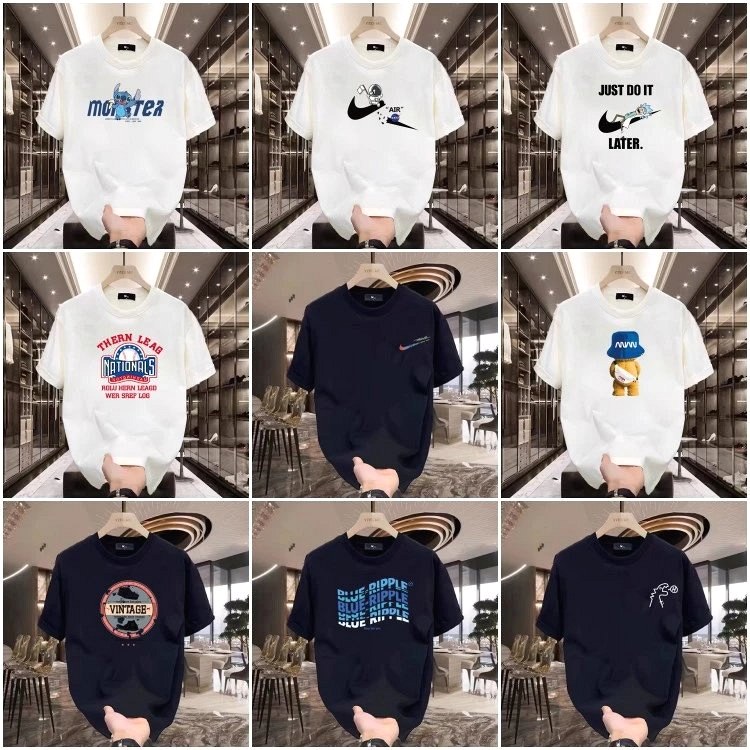
Most cheap graphic tees fail somewhere unglamorous. Not at the print, which is what the listing photo sells, but at the collar rib that goes wavy after four wears, or the hem that twists a centimetre off true after two washes. So when the Nike bear-graphic T-shirt collection turned up at $3.88 against a $4.39 list price, SKU 7715851691, we ordered two — a white M and a black 2XL — and spent the week watching the seams instead of the artwork.
The listing describes a pure cotton pullover, crew neck, short sleeves, no hood, relaxed fit, digital print, 180–250 gsm, sizes M through 5XL, each motif offered in white and black. Our job on the bench was to find out which of those lines we could stand behind after handling the actual garments.
What we opened, and how we recorded it
Both shirts arrived folded in plain poly bags, no hangtag, no care label inside the neck on either one. That last detail matters more than it sounds: with no printed fibre content or wash instruction on the garment, everything we know about the fabric comes from the listing, not from the shirt. If you buy one, photograph the listing text before the page changes, because the shirt will not repeat it back to you.
We opened both parcels on camera, photographed the neckline, the chest print and the hem before wearing anything, then measured flat on the bench with a steel tape and a seam gauge. Collar rib depth was taken at three marks — left shoulder, centre front, right shoulder — and re-taken two hours after each wear to see how much of the stretch came back.
| Bench check | White, M | Black, 2XL |
|---|---|---|
| Chest, flat, pit to pit | 55 cm | 63 cm |
| Body length, shoulder to hem | 70 cm | 76 cm |
| Shoulder, seam to seam | 50 cm | 57 cm |
| Sleeve, underarm to hem | 21 cm | 24 cm |
| Collar rib depth, new | 2.0 cm | 2.0 cm |
| Collar rib depth, after five wears | 2.1 cm | 2.1 cm |
| Shirt weight on the calibrated scale | 197 g | 231 g |
| Weight of a cut 10 cm square | 2.19 g | 2.31 g |
| Hem stitches per 10 cm | 34 | 33 |
The collar rib is where this shirt earns or loses its money
A 2.0 cm rib on a crew neck is a sensible depth for a relaxed tee: deep enough to hold a shape, shallow enough not to read as a mock neck under a jacket. What we wanted to know was whether it springs back. After each of five wears — two of them full commuting days with a light jacket over the top — the rib had stretched to between 2.1 and 2.2 cm at the centre front and returned to 2.1 cm within two hours of coming off. It never went wavy, and the neck opening did not gape when we pulled the shirt over the head repeatedly.
That is not a promise about month six. It is a promise about week one, which is more than most listings at this price give you. Where we would expect trouble later is the join between rib and body, so we tugged that seam by hand at four points on each shirt and found no skipped stitches or loose thread tails.
Hem, shoulders and stitch density
The bottom hem is a single-needle cover stitch at roughly nine stitches per inch — 34 and 33 per 10 cm on the two shirts. That is ordinary for a mass-market jersey tee and adequate for the fabric weight. The shoulder seams are taped on the 2XL and untaped on the M, a difference between sizes worth knowing if you carry a bag strap on one shoulder all day.
Our note on the bench sheet: nothing on either shirt read as fragile. The construction is plain, and it is plain in the way that is easy to inspect rather than the way that hides something.
We also checked the side seams for twist by folding each shirt flat, aligning the hem, and marking where the side seam landed relative to the fold. The white M sat within 0.5 cm. The black 2XL sat about 1.2 cm off after its first wash, which is inside what we tolerate at this price but is visible if you look for it.
Fabric weight: inside the stated band, both sizes
A cut 10 cm square weighed 2.19 g on the white M and 2.31 g on the black 2XL, which puts the jersey at roughly 219 and 231 gsm. Both sit inside the 180–250 gsm the listing claims, and the whole garments at 197 g and 231 g are consistent with that. The hand is dry rather than silky, with a slight surface texture you can feel across the chest panel. It dried quickly when we wetted a square and timed it on the bench, which supports the moisture-wicking line without proving anything about a hot afternoon.
The printed panel is the one place where the hand changes. Flexed between thumb and forefinger, the graphic reads very slightly stiffer than the jersey around it, which is normal for digital printing and is the reason we treat print longevity as an open item rather than a settled one.
What one week of wear cannot tell you
Two things, both important.
- Print durability. Our shirts have had seven days and two home washes. A reviewer on Trustpilot reported the emblem peeling from a lightly worn black Nike polo at around six months; that is a single low-confidence report about a different product, not a finding about this listing, but it is the only durability signal available and we are not going to bury it.
- Shrinkage. We washed both shirts twice at 30°C and air-dried them; the M lost under 1 cm in body length, which is within the 1–3 cm tolerance the listing states. A sourced discussion among Nike cotton-tee owners warns that cotton can shrink further with tumble drying. Assume some movement and choose accordingly.
Sizing, without a published measurement chart
The listing gives a 1–3 cm tolerance and a size run from M to 5XL, but no per-size measurements. That means the letter on the label is a guess and your own tape is the only reliable input. Our guidance, and the guidance in the sourcing we reviewed, is the same: measure a tee you already like across the chest and in body length, then match it. Overshooting produces a shapeless drop-shoulder look; undershooting loses the relaxed cut that makes this pattern work.
The two shirts we ordered also illustrate why one size review is not enough. Between the M and the 2XL the chest grew 8 cm and the length 6 cm, so the cut scales upward rather than stretching sideways, and the shoulder seam moves out 7 cm. If you are between sizes and want the loose silhouette, take the larger one and accept the extra length.
Ordering notes
The colour picker is the practical hurdle. Nineteen named motifs are each offered in white and black, plus plain white and plain black — around forty options in a single dropdown, with the print names translated inconsistently. Read the option label and the linked photograph together, because the same bear appears at different scale on the white and black versions. The listing also quotes $3.88 against a $4.39 original, and agent handling and shipping sit outside both figures, so your landed cost per shirt depends entirely on how many you consolidate into one parcel.
What we would do on a repeat order
We would buy the white again without much thought: it took the washes, the collar held, and the seam work is honest. We would size the black up one step and dry it flat, and we would photograph the collar and print at the same three points at one month and again at three, because that is the interval where a printed surface on a shirt this cheap either proves itself or quietly starts to lift.
What works
- Measured 219 and 231 gsm from cut squares, inside the 180–250 gsm claim
- Collar rib recovered to within 0.1 cm after each of five wears
- Honest hem and shoulder seams at roughly nine stitches per inch
Watch-outs
- Print longevity untested here; one reviewer reports peeling on a different Nike top at six months
- No published per-size measurements, only a stated 1–3 cm tolerance
- No care or fibre label inside either shirt